The fold, an invisible line placed on a website where the bottom browser chrome cuts off the rest of your page, forcing the user to scroll to see the remainder of the content. Content of any importance must reside above the fold if it is to be seen let alone clicked on. Any content below the fold is well, just not important. This was the design convention that designers would design towards. Surprisingly some still do.
But the fold is no longer an issue, maybe it never really was. Research has shown that users will scroll to find the content they are looking for. And there can be a lot gained by allowing your site to scroll and adding white space making your site easier to read.
I found it interesting, and somewhat shocking when working on a project to hear the client talk about moving more information above the fold. They client was concerned that users were not clicking on the links below the fold and that to increase the click through rate on these links that the information must be placed above the fold.
The client was very visual in nature so sharing only numbers and percentages wasn’t going to cut it. I needed to debunk this myth of fold visually.
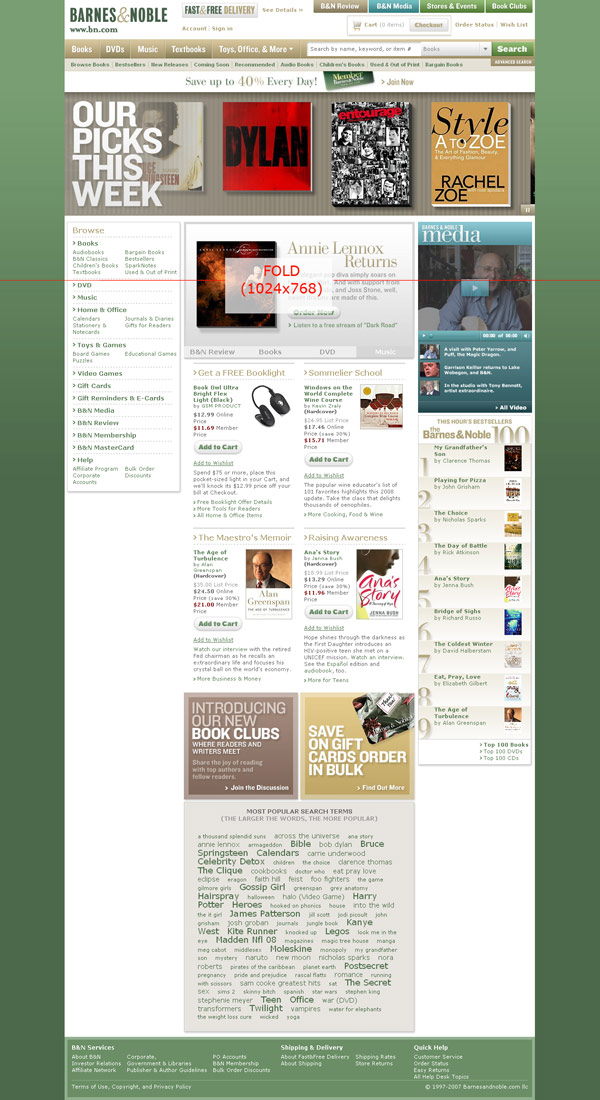
In preparation for the meeting I captured the homepage of five (5) different websites that visitors to my clients’ website would also visit. I then marked on each one where the “fold” would be and measured the number of pixels above and below the fold.
The images from my presentation are shown below along with the measurements are listed below.
Barnes & Noble
- 25% of site information above the fold
- 75% of site information below the fold
Target
- 27% of site information above the fold
- 72% of site information below the fold

HGTV
- 27% of site information above the fold
- 72% of site information below the fold

FoodTV
- 28% of site information above the fold
- 72% of site information below the fold
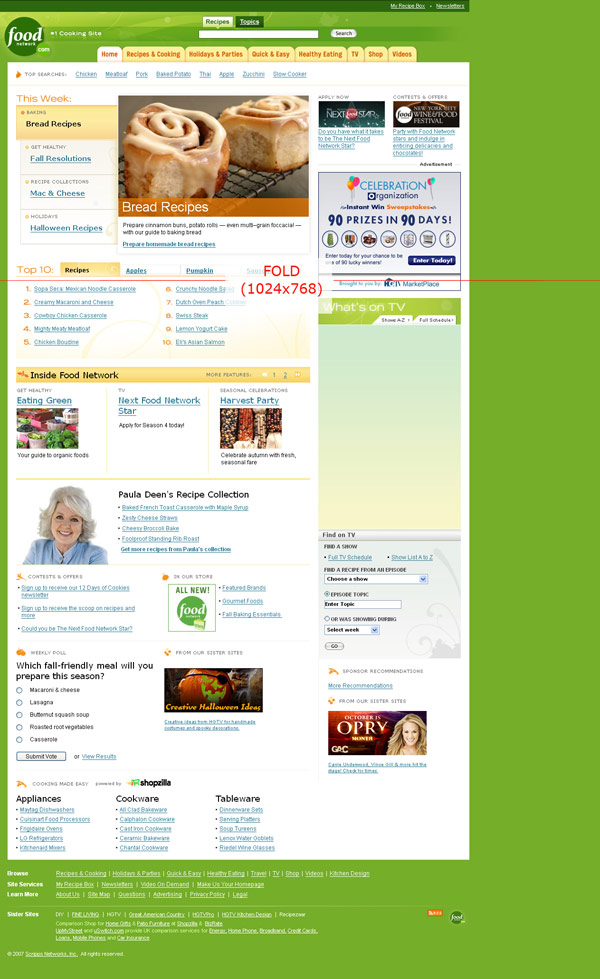
This presentation proved to be a convincing argument and really opened the eyes of the client. The fact that major consumer brands are designing their websites so that over 70% of the content is below the fold should solidify the fact that the fold is a myth.
With all the all the variable that make website design difficult it is time to remove one troublesome myth and concentrate on the real stuff.